Sensate focus exercises help erectile dysfunction caused by anxiety by removing performance pressure and retraining the brain to respond to touch without fear. Instead of focusing on erections, these exercises shift attention to physical sensations, which calms the nervous system and reduces anxiety during partnered intimacy. Sensate focus is especially useful when erection problems appear suddenly and occur mainly during sex with a partner, despite normal morning erections.
In anxiety based erectile dysfunction, the problem is rarely sexual desire or attraction. It is the constant monitoring of erections, fear of losing control, and pressure to perform that activates the stress response and disrupts natural arousal. Over time, even one or two failed experiences can condition the body to expect failure.
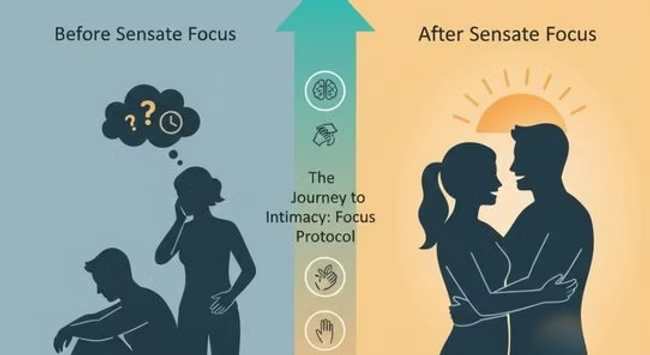
Sensate focus works by deliberately removing erection, penetration, and orgasm as goals. Instead, it retrains attention toward bodily sensation and safety, helping the nervous system shift out of threat mode. This approach is commonly used when medical causes have been ruled out and erections are situational, inconsistent, or anxiety dependent.
What Is Sensate Focus and How Is It Used in Erectile Dysfunction Anxiety?
Sensate focus is a therapeutic approach originally developed within sex therapy to help individuals and couples reduce sexual performance pressure. In the context of erectile dysfunction anxiety, it is adapted specifically to address fear driven erection difficulties rather than physical arousal problems.
Unlike common sexual advice that focuses on stimulation, technique, or achieving erections, sensate focus deliberately removes erection, penetration, and orgasm as goals. The central aim is to shift attention away from “performing” and toward experiencing physical sensations without judgment. This is critical for men with anxiety based erectile dysfunction, where excessive self monitoring and fear of failure interfere with natural arousal.
In erectile dysfunction anxiety, the mind often stays one step ahead of the body. Men begin checking erection firmness, predicting loss of control, or mentally rehearsing failure. Sensate focus interrupts this pattern by creating structured experiences where nothing is expected to happen. Touch is explored slowly, safely, and without pressure to respond in any particular way.
When used correctly, sensate focus helps retrain the nervous system to associate intimacy with safety rather than threat. Over time, erections may return naturally as a byproduct, but they are never treated as a measure of success. This makes sensate focus particularly effective for psychogenic, situational, and performance anxiety related erectile difficulties.
Why Anxiety Causes Erectile Dysfunction
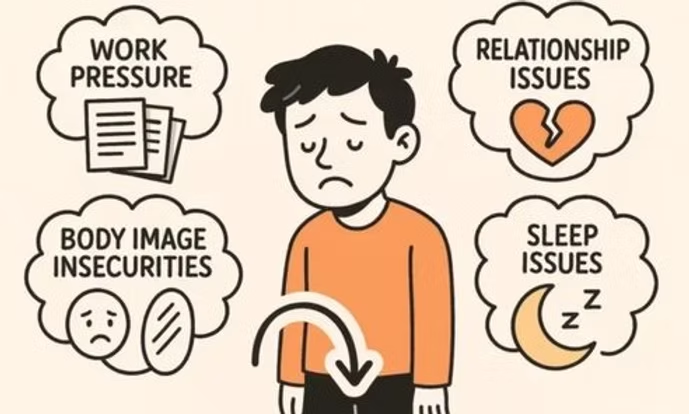
Anxiety is one of the most common non physical causes of erectile dysfunction. In anxiety driven erectile problems, the issue is not a lack of sexual desire or attraction, but the body’s stress response interfering with arousal.
When a man becomes anxious about sexual performance, his brain shifts into a threat focused state. Thoughts such as “What if I lose my erection?” or “I have to perform well” activate the sympathetic nervous system, which is responsible for fight or flight responses. A pattern commonly seen in sexual performance anxiety. This system prioritizes survival, not sexual arousal. As a result, blood flow, muscle tension, and attention shift away from the conditions required for an erection.
Another key factor is erection monitoring. Many men with erectile dysfunction anxiety begin checking firmness repeatedly during intimacy. This self monitoring increases pressure and pulls attention away from sensation, reinforcing anxiety. Even minor fluctuations in erection can then trigger panic, further disrupting arousal.
Over time, the body learns to associate sexual situations with stress rather than pleasure. One or two difficult experiences can be enough to create a fear of repetition. This leads to avoidance, loss of confidence, and a cycle where anxiety becomes both the cause and the consequence of erectile dysfunction. Understanding this mechanism is essential before any exercise or treatment can be effective.
The Erectile Dysfunction Anxiety Loop Explained (Thought → Body → Fear)
Erectile dysfunction anxiety often follows a predictable loop that strengthens over time if it is not addressed. The cycle usually begins with a thought. This may be a memory of a previous sexual difficulty or an anticipatory worry such as “What if it happens again?” Even before physical intimacy begins, the mind is already preparing for failure.
This thought triggers a bodily response. Anxiety activates the stress system, increasing heart rate, muscle tension, and mental alertness. Instead of relaxing into sensation, the body shifts into control mode. Sexual arousal, which depends on calm attention and safety, becomes difficult to sustain under these conditions.
As the erection weakens or does not appear as expected, fear increases. The man interprets this change as confirmation that something is wrong. He may attempt to force arousal, check firmness repeatedly, or seek reassurance. These reactions increase pressure and further disrupt the body’s natural response.
The final stage of the loop is learning. The brain records the experience as a threat and stores it as a warning for future encounters. The next sexual situation then triggers the same chain even faster. Over time, this loop can develop after only a few experiences, making erectile dysfunction feel unpredictable and out of control. Breaking this cycle requires addressing both the mental trigger and the bodily response, not just the erection itself.
Why Sensate Focus Exercises Works for Erectile Dysfunction Anxiety
Sensate focus works for erectile dysfunction anxiety because it addresses the root problem rather than the symptom. In anxiety based erectile difficulties, the primary issue is not erection failure itself, but the pressure, fear, and self monitoring that interfere with the body’s natural sexual response.
During sensate focus exercises, attention is intentionally redirected away from performance and outcome. There is no expectation to become aroused, maintain an erection, or engage in penetration. This removal of goals reduces threat perception and allows the nervous system to shift out of stress mode. When anxiety decreases, the body becomes more capable of responding naturally to touch.
Another important mechanism is attentional retraining. Men with psychogenic erectile dysfunction anxiety often focus internally on erection firmness or externally on pleasing a partner. Sensate focus teaches awareness of physical sensation without judgment. This helps break the habit of monitoring and creates a more grounded, present experience during intimacy.
Sensate focus also functions as a form of gradual desensitization. Touch, which may have become associated with fear or failure, is reintroduced in a safe and controlled way. Over time, the brain relearns that sexual closeness does not require vigilance or control. Erections may return as a natural byproduct of reduced anxiety, but they are not treated as a measure of success. This shift is what makes sensate focus particularly effective for anxiety driven erectile dysfunction.
Who Sensate Focus Exercises Work Best for
- Men with sudden erection problems linked to performance anxiety
- Those who have normal morning or solo erections
- Erection difficulties that appear mainly during partnered sex
- Anxiety, fear of failure, or pressure to perform during intimacy
How Sensate Focus Breaks the Erectile Dysfunction Anxiety Cycle
Sensate focus breaks the erectile dysfunction anxiety cycle by changing how the body and mind respond to intimacy, rather than trying to control erections directly. In anxiety based erectile dysfunction, sexual situations automatically trigger vigilance, self evaluation, and fear of failure. Sensate focus interrupts this pattern at multiple levels.
First, it removes erection as a success marker. When there is no requirement to perform, the mind has less reason to monitor the body. This reduction in self surveillance lowers anxiety and allows attention to remain with physical sensation instead of outcome.
Second, sensate focus retrains the body’s response to touch. By engaging in slow, non pressured contact, the nervous system learns that intimacy does not require readiness or control. Repeated exposure to safe, expectation free touch gradually weakens the conditioned fear response that drives erectile dysfunction anxiety.
Third, sensate focus shifts confidence from performance to presence. Instead of evaluating sexual ability based on erection quality, men begin to trust their capacity to stay engaged, relaxed, and responsive. This creates a new internal reference point for sexual confidence.
Finally, sensate focus disrupts avoidance. Many men with erectile dysfunction anxiety begin to withdraw emotionally or physically from intimacy. Structured exercises provide a clear path back into closeness without triggering fear. Over time, this combination of reduced monitoring, safety learning, and confidence rebuilding helps dismantle the anxiety loop that maintains erectile dysfunction.
A Clinically Structured 6-Week Sensate Focus Framework for ED Anxiety
Sensate focus tends to work best for erectile dysfunction anxiety when it follows a gradual, structured progression rather than being rushed. In clinical practice, a staged approach allows anxiety to reduce first, before sexual expectations are slowly reintroduced. Progress is guided by comfort and nervous system regulation, not erection quality.
A 6 week framework provides enough time for the nervous system to relearn safety around touch and intimacy. Each stage builds on the previous one, increasing emotional and physical closeness without overwhelming the individual or triggering performance pressure. Progression is guided by comfort and anxiety reduction, not erection quality. In psychosexual therapy, including work done by sex therapist Dr Dhruv Bhola, sensate focus is commonly adapted in this structured manner for men whose erectile difficulties are anxiety driven.
The following stages outline how sensate focus is commonly adapted over time for men experiencing erectile dysfunction anxiety.

Week 1: Eye Gazing and Hand Awareness
Recommended duration: 15 minutes per session, once daily or every alternate day
- Primary purpose:
- Reduce avoidance anxiety and performance anticipation
- Rebuild comfort with closeness before sexual touch
- What to do:
- Sit facing each other in a quiet, relaxed space
- Maintain gentle eye contact for short intervals without speaking
- Place palms together and notice warmth, pressure, and texture
- Keep breathing slow and natural
- What to focus on:
- Sensations in the hands
- Subtle emotional reactions during eye contact
- Urges to look away, tense up, or distract yourself
- Erectile dysfunction anxiety context:
- No sexual touch is involved
- No erection is possible or expected
- This allows the nervous system to experience safety without performance pressure
- Common pitfalls:
- Rushing through the exercise
- Treating it as irrelevant or “too basic”
- Turning it into an emotional discussion
- Progress markers:
- Less restlessness during eye contact
- Reduced urge to escape or distract
- Ability to stay present without self monitoring
Week 2: Full Non-Genital Touch With Role Switching
Recommended duration: 25–30 minutes per session, 3–4 times per week
Structure: 10–15 minutes per role, switch midway
- Primary purpose:
- Reduce performance pressure during physical touch
- Retrain the body to experience touch without expectation
- Structure of the exercise:
- One partner is the giver, the other is the receiver
- The receiver’s role is only to notice sensations, not respond
- After 10–15 minutes, roles are switched
- No verbal feedback during touch unless needed for comfort
- What areas are included:
- Face, arms, shoulders, back, legs, and feet
- Genitals and chest are intentionally excluded
- How to touch:
- Vary pressure, speed, and texture gently
- Explore what feels pleasant, neutral, or uncomfortable
- Pause if anxiety increases and resume slowly
- Focus for the receiver:
- Physical sensations rather than thoughts or outcomes
- Breathing and muscle relaxation
- Noticing when the mind drifts toward performance fears
- Erectile dysfunction anxiety context:
- No sexual stimulation is involved
- Erections are neither expected nor relevant
- This stage weakens the link between touch and performance
- Common pitfalls:
- Turning touch into sexual stimulation
- Giving feedback aimed at pleasing the partner
- Monitoring the body for arousal changes
- Progress markers:
- Reduced tension during touch
- Ability to receive without guilt or pressure
- Increased comfort with prolonged physical closeness
Week 3: Back and Chest Inclusion
Recommended duration: 25 minutes per session, 3–4 times per week
- Primary purpose:
- Increase emotional and physical vulnerability
- Introduce areas that may trigger arousal without performance pressure
- What changes in this stage:
- The chest, upper torso, and back are now included
- Touch remains slow, exploratory, and non goal oriented
- Genitals are still excluded
- How to approach touch:
- Use full hands rather than fingertips only
- Vary pressure gently and notice reactions
- Maintain steady breathing throughout
- Erectile dysfunction anxiety context:
- Erections may appear incidentally at this stage
- Erections are treated as neutral bodily responses
- No attempt should be made to enhance, sustain, or test them
- What to focus on:
- Sensations such as warmth, tension release, or relaxation
- Emotional responses like vulnerability or self consciousness
- Staying present even if arousal fluctuates
- Common pitfalls:
- Becoming alert or excited about erections
- Shifting attention from sensation to outcome
- Advancing too quickly to genital touch
- Progress markers:
- Reduced anxiety when arousal appears or fades
- Ability to stay relaxed despite physical changes
- Increased comfort with chest and torso touch
Week 4: Gentle Genital Introduction (No Goal)
Recommended duration: 30 minutes per session, 3–4 times per week
- Primary purpose:
- Reduce fear associated with genital touch
- Decouple genital contact from erection expectations
- What changes in this stage:
- Genital area is introduced for the first time
- Touch is light, indirect, and without intention to arouse
- Clothing or light covering is usually kept on
- How to approach genital touch:
- Use feather-light, slow contact over clothing
- Avoid rhythmic or stimulating movements
- Treat genital touch as another area of sensation, not a trigger
- Erectile dysfunction anxiety context:
- Arousal may increase, decrease, or not appear at all
- Erections are allowed but not encouraged
- The goal is comfort, not response
- What to focus on:
- Texture, temperature, and pressure of touch
- Emotional reactions such as fear, anticipation, or relief
- Returning attention to sensation if the mind jumps to outcome
- Common pitfalls:
- Turning touch into stimulation
- Testing erection strength
- Rushing toward intercourse or orgasm
- Progress markers:
- Reduced anxiety around genital contact
- Less urge to monitor erections
- Ability to stay relaxed during genital touch
Week 5: Nude Genital Touch
Recommended duration: 30–35 minutes per session, 3–4 times per week
- Primary purpose:
- Increase comfort with direct genital contact
- Reduce anxiety linked to nudity and physical exposure
- What changes in this stage:
- Clothing is removed
- Direct genital touch is introduced
- Touch remains slow and exploratory, not performance driven
- How to approach genital touch:
- Use lubricant to reduce friction and tension
- Vary pressure, speed, and contact gently
- Avoid focusing on erection firmness or duration
- Erectile dysfunction anxiety context:
- Erections may appear, fluctuate, or disappear
- These changes are treated as neutral bodily responses
- No attempt should be made to “keep” or “test” the erection
- What to focus on:
- Sensory qualities such as warmth, softness, or relaxation
- Breath awareness and muscle release
- Returning attention to sensation if anxiety increases
- Common pitfalls:
- Shifting into stimulation with a goal of arousal
- Checking erection quality
- Advancing to intercourse prematurely
- Progress markers:
- Reduced anxiety during nude contact
- Less monitoring of genital response
- Greater ease with physical closeness
Week 6: Mutual Genital Touch and Optional Reintroduction of Intercourse
Recommended duration: 35–40 minutes per session, 2–3 times per week
- Primary purpose:
- Integrate intimacy with reduced anxiety
- Allow sexual activity to emerge naturally without pressure
- What changes in this stage:
- Both partners engage in genital touch simultaneously
- Kissing and full body contact may be included
- Intercourse is optional, not required
- How to approach this stage:
- Continue focusing on sensation rather than outcome
- Let arousal build or fade without interference
- Pause or slow down if anxiety increases
- Guidelines for intercourse (if attempted):
- Only proceed if anxiety has reduced significantly over previous weeks
- Penetration should feel calm and unforced
- Stop and return to earlier stages if pressure appears
- Erectile dysfunction anxiety context:
- Erections may fluctuate during mutual touch or penetration
- Loss of erection is treated as information, not failure
- Safety and presence are prioritized over completion
- Common pitfalls:
- Treating intercourse as a test
- Rushing due to fear of losing the erection
- Forcing continuation despite rising anxiety
- Progress markers:
- Ability to stay present during mutual touch
- Reduced fear around erection changes
- Increased confidence in handling intimacy without panic
What to Do If an Erection Appears or Disappears During Sensate Focus
- Erections commonly appear or fade during sensate focus and are not indicators of success or failure.
- If an erection appears, continue the exercise without changing touch or attention. Avoid trying to maintain or test it.
- If an erection disappears, do not react with urgency or disappointment. Stay with the current exercise and sensations.
- Reacting to erection changes increases performance monitoring and can reactivate anxiety.
- Helpful reminders include: “Nothing is required right now” and “This is not a test.”
- Pause or return to an earlier stage if anxiety rises sharply or attention becomes outcome focused.
Solo Sensate Focus Adaptations for Men Without a Partner
- Sensate focus can be adapted for men without a partner and is effective for anxiety driven erectile difficulties.
- The goal is sensation awareness, not masturbation or erection testing.
- Begin with non genital self touch using a timer, focusing on texture, pressure, and temperature.
- Genital touch may be introduced later without rhythmic stimulation or performance goals.
- Mirror based awareness can help reduce body vigilance and shame.
- Tracking anxiety levels before and after sessions is more useful than tracking erections.
- Progress is reflected by reduced anxiety and increased comfort, not physical response.
Partner Communication During Sensate Focus (What Helps vs What Hurts)
- Helpful communication is neutral, patient, and aligned with the exercise structure.
- Statements that emphasize comfort and lack of pressure support progress.
- Performance focused reassurance, repeated checking, or expressions of disappointment tend to increase anxiety.
- Partners should agree in advance that erections are not goals and fluctuations are expected.
Frequently Asked Questions
Can sensate focus cure erectile dysfunction?
Sensate focus does not cure physical erectile dysfunction. It is effective for anxiety-based or psychogenic erectile difficulties by reducing performance pressure and retraining the nervous system’s response to intimacy.
How long does sensate focus take to work for ED anxiety?
Most men notice reduced anxiety within a few weeks. Meaningful improvement typically occurs over 4–6 weeks, depending on consistency and severity of anxiety rather than erection quality.
Is it normal for erections to come and go during sensate focus?
Yes. Fluctuating erections are common and expected. Sensate focus works best when erections are treated as neutral responses, not goals or indicators of progress.
Can sensate focus be done alone?
Yes. Modified sensate focus exercises can be practiced solo to reduce anxiety, body vigilance, and performance related fear, especially when a partner is not available.
How to get rid of erectile dysfunction anxiety?
Erectile dysfunction anxiety is reduced by removing performance pressure and retraining the body’s stress response. Approaches like sensate focus, anxiety awareness, and gradual exposure to intimacy help break the fear–failure cycle more effectively than reassurance or forcing arousal.
What is sensate focus for erectile dysfunction?
Sensate focus for erectile dysfunction is a structured psychosexual exercise that removes erection and penetration as goals. It helps men reduce performance anxiety by shifting attention toward bodily sensations and restoring a calm, non-threatening sexual response.